

Growing your own medicinal herbs that are both edible and traditionally useful sounds like the perfect combination. But choosing the right plants, knowing how to use them safely, and understanding the difference between seasoning your food and treating a health condition are three very separate things. Many UK gardeners discover quickly that “edible” and “safe for medicinal use” are not the same label. The RHS practical growing and harvesting framework offers a solid starting point for home-growers, and this guide builds on that foundation by adding the safety layer that makes all the difference.
Table of Contents
- How to select edible medicinal plants safely
- Top edible medicinal plants for UK gardens
- Wild and foraged edible medicinal plants: Extra caution required
- Growing and harvesting: UK-specific tips for success
- Why treating edibility and medicinal use separately protects your health (and garden joy)
- Build your living apothecary: Explore UK’s best edible medicinal herbs
- Frequently asked questions
Key Takeaways
| Point | Details |
|---|---|
| Distinguish edibility from medicinal use | Just because a plant is edible doesn’t mean it’s safe for home remedies—always check both. |
| Know your growing conditions | Most edible medicinal herbs thrive in full sun and fertile, moisture-retentive soil in the UK. |
| Exercise caution with wild plants | Only forage herbs you can confidently identify and always avoid polluted areas. |
| Use expert resources for success | RHS and NHS guidance provide trusted horticultural and safety advice for UK home-growers. |
| Container gardening enables flexibility | Growing herbs in containers helps manage UK climate variability and maintain a steady supply. |
How to select edible medicinal plants safely
Now that you understand the importance of both flavor and safety, let’s explore what you should ask before choosing any plant.
The first question is simple: can you eat it without harm? The second question is harder: is it safe to use for a specific health purpose, at a specific dose, for your particular body and medical history? These are genuinely separate questions. A plant can be entirely safe on your dinner plate and still carry risks if you start taking it in concentrated form as a herbal supplement to treat a condition such as high blood pressure, high cholesterol, a common cold, or anxiety.
Key criteria for choosing edible medicinal plants:
- Is the plant clearly identified, correctly labeled, and from a reputable source?
- Has it been grown without pesticides or chemical treatments?
- Do you have any health conditions, or are you taking any medications that might interact with this plant?
- Are you pregnant, breastfeeding, or due for surgery?
- Have you checked current medical guidance or spoken with your GP?
The sourcing question matters more than most people realize. Plants bought from specialist nurseries or grown from verified seed are far safer than anything foraged without expert guidance. A beginner-friendly herb kit from a specialist supplier gives you correctly identified, organically grown plants from day one.
Important: NHS guidance on herbal medicines clearly states that herbal medicines can interact with prescription medicines and may not be safe for everyone, especially ahead of surgery or for people managing serious conditions.
The RHS caution on self-medication is equally direct: even edible herbs should not be used for self-medication without proper knowledge and professional guidance. Growing herbs is wonderful. Using them as food is wonderful. Diagnosing and treating yourself without medical input is where things can go wrong.
Pro Tip: Always introduce a new herb into your diet in small amounts first. Food sensitivities and mild allergic reactions to botanicals are more common than most gardeners expect.
Top edible medicinal plants for UK gardens
Armed with a selection framework, here are some of the best plants to consider for your garden.
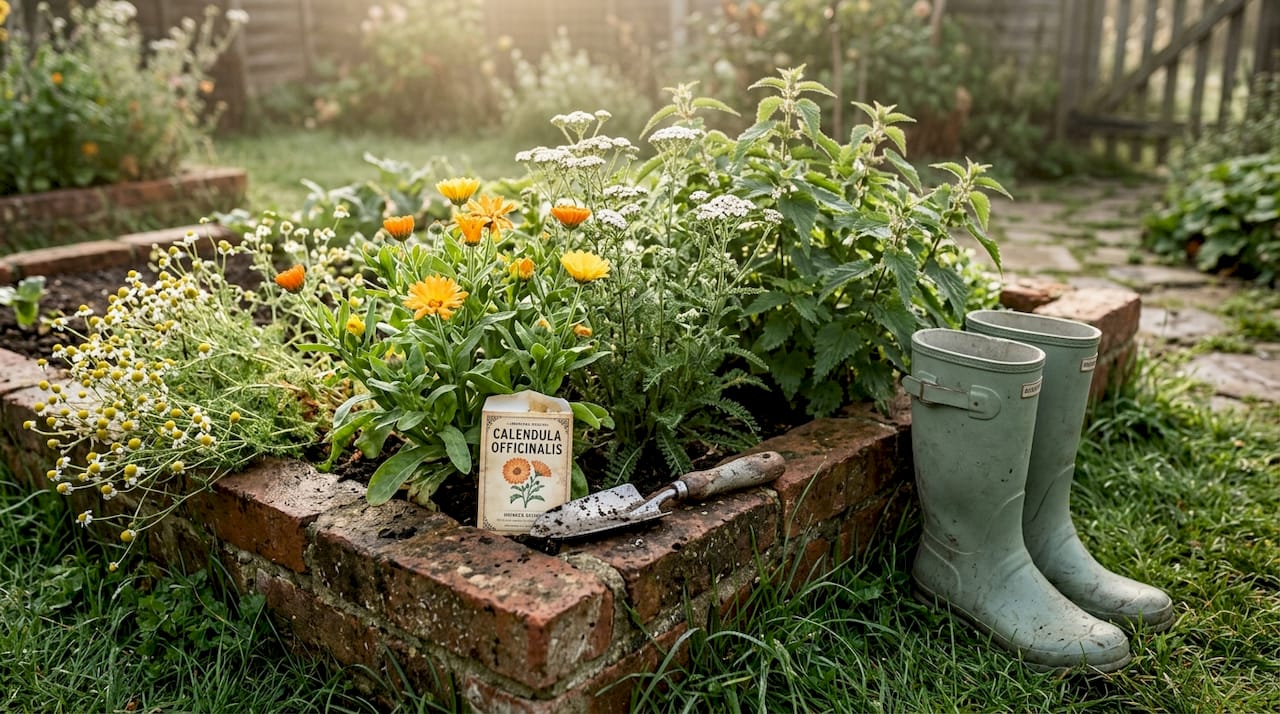
The UK climate suits a surprisingly wide range of edible medicinal herbs. The following plants are well established in traditional use, grow well in British conditions, and have genuine culinary value alongside their historical medicinal reputation. Common edible medicinal herbs including lemon balm, peppermint, sage, garlic, and chamomile all have full RHS growing and harvesting guides available.
| Herb | Light | Soil | Culinary use | Traditional medicinal note | Container friendly |
|---|---|---|---|---|---|
| Lemon balm | Full sun/part shade | Moist, well-drained | Teas, salads, desserts | Calm, digestion, reduce anxiety | Yes |
| Peppermint | Full sun/part shade | Moist, fertile | Teas, sauces, drinks | Digestion, headaches, common cold support | Yes (preferred) |
| Sage | Full sun | Well-drained, fertile | Stuffings, soups, meats | Throat, memory | Yes |
| Chamomile | Full sun | Well-drained, light | Teas, baking | Sleep, digestion, reduce anxiety | Yes |
| Meadowsweet | Part shade | Moist, fertile | Teas, cordials, desserts | Digestion, anti-inflammatory effect | No (prefers ground) |
| Garlic | Full sun | Well-drained, fertile | Cooking, sauces | Immune support, lower cholesterol and blood pressure | Yes (deep pots) |
| Yarrow | Full sun | Well-drained, poor | Teas, salads | Wound healing, fever | Yes |
| Nettle | Part shade | Moist, nitrogen-rich | Soups, teas, pesto | Iron, inflammation, skin conditions | Not ideal |
Growing highlights for each:
- Lemon balm is one of the easiest herbs to grow and one of the most rewarding. It spreads readily, so container growing helps keep it in check. The leaves have a gentle lemon scent and taste wonderful in cold water or herbal teas.
- Peppermint grows aggressively and almost always does better in a pot. Check out mint growing tips for ideas on growing a mint blend that includes chocolate and apple varieties for real variety.
- Sage is a reliable perennial that tolerates dry spells well. Harvest before it flowers for the best flavor and cut it back hard in spring to keep it bushy.
- Chamomile comes in two main types. Roman chamomile works beautifully as a low ground cover and is excellent for pollinators. Explore chamomile for calm if you want a fragrant lawn alternative or a border edging.
- Meadowsweet is a British native that loves damp spots near ponds or in shaded beds. Its creamy flowers have a delicate almond scent. Get the full picture on the meadowsweet plant before planting, as it needs more moisture than most herbs.
- Yarrow and plantain are underrated garden herbs. They tolerate poor soil and neglect. The wild healer herb kit combines yarrow with plantain and comfrey for a traditional healing trio.
Pro Tip: Plant lemon balm and chamomile together in a sunny border. Both attract bees, grow at similar heights, and can be harvested throughout summer for fresh teas. They are genuinely beautiful as well as useful.
Wild and foraged edible medicinal plants: Extra caution required
Beyond the garden and into the wild, extra awareness is essential when harvesting edible medicinal plants outside your own plot.
Foraging is having a real moment in the UK. It connects you to the landscape, feels deeply satisfying, and offers plants you simply cannot buy. But the risks are real and should not be underestimated. Safe wild-foraging requires strict identification protocols and avoiding contaminated or polluted areas, as National Geographic makes clear in their guidance on UK wild herbs.
Common UK wild edible medicinal plants and key identification notes:
| Plant | Where found | Identification tip | Traditional use | Cautions |
|---|---|---|---|---|
| Nettle | Hedgerows, gardens | Serrated leaves, sting on touch | Iron-rich tea, soup | Handle with gloves |
| Dandelion | Lawns, roadsides | Hollow stem, lion-tooth leaves | Digestion, liver | Avoid roadsides |
| Yarrow | Grassland, meadows | Feathery leaves, flat white flowers | Wound healing, fever | May cause reactions |
| Meadowsweet | Riverbanks, damp meadows | Creamy flowers, almond scent | Digestion, aspirin history | Avoid if aspirin sensitive |
Safe foraging step-by-step:
- Take a guided foraging walk with an expert before going solo.
- Use at least two reliable field guides and cross-reference every plant.
- Avoid anywhere near roadsides, industrial sites, or sprayed farmland.
- Do not pick near areas used heavily by dogs or livestock.
- Harvest no more than a third of any wild plant patch.
- Wash all foraged material thoroughly before use.
- Start with only one new foraged plant at a time, in small amounts.
“The most dangerous plant in any hedgerow is the one you think you recognize but haven’t fully confirmed.” This is especially true for plants like meadowsweet, which can be confused with hemlock water-dropwort in damp areas.
If you prefer to skip the identification risk entirely, a wild herb kit gives you the wild-growing varieties you want without the guesswork. Similarly, plants like hedge woundwort are excellent for growing at home rather than foraging, as they establish quickly and have a long traditional use history for wound care.
Nettle deserves special mention. It is one of the most nutritious and versatile wild plants in the UK, and it grows almost everywhere. Young spring tops are best for eating and are rich in iron and vitamins. Nettles are also straightforward to identify, making them one of the safest foraging starting points for beginners.
Growing and harvesting: UK-specific tips for success
With choices made and safety tips in hand, here’s how to cultivate, maintain, and harvest your chosen plants effectively.
UK growing conditions vary enormously from Cornwall to the Scottish Highlands. That said, most edible medicinal herbs follow a reliable set of needs that you can adapt for your specific garden. The RHS herb cultivation advice confirms that herbs thrive best in full sun or good light, well-drained but moisture-retentive, fertile soil enriched with organic matter. Containers and multiple sowings are the most reliable route for consistent results in British conditions.
Step-by-step cultivation guide for UK home-growers:
- Prepare your soil. Dig in a generous amount of well-rotted compost before planting. Most medicinal herbs prefer a pH between 6.0 and 7.0. Test your soil if you are unsure.
- Choose your site. Most herbs need at least six hours of direct sunlight. A south-facing wall or raised bed is ideal. For shade-tolerant options like meadowsweet or lemon balm, an east-facing border works well.
- Sow in successions. Rather than one big sowing in spring, sow smaller batches every three to four weeks. This gives you a continuous harvest window and reduces the risk of everything maturing at once.
- Water consistently but not excessively. Overwatering is the most common mistake with herbs. Most prefer to dry out slightly between waterings, especially sage, thyme, and garlic.
- Harvest regularly. Cutting herbs regularly encourages new, productive growth. Never take more than a third of the plant at one time. Morning harvesting, after the dew dries but before the midday sun, preserves the most essential oils.
- Overwinter strategically. Hardy perennials like sage, lemon balm, and yarrow will survive most UK winters with a light mulch of straw or leaves. More tender plants like lemon verbena benefit from being brought inside or grown in a frost-free greenhouse.
- Use containers for invasive herbs. Mint, lemon balm, and some chamomile varieties will take over a bed if left unchecked. Containers let you enjoy them without sacrificing the rest of your garden.
Pro Tip: Label every plant with both its common name and Latin name. It saves confusion at harvest time and is especially useful when you’re growing multiple mint varieties or similar-looking herbs alongside each other.
For those just starting out, browsing herb seed kits gives a great overview of what’s available for the UK growing season, with options suited to both small balconies and large allotments.
Why treating edibility and medicinal use separately protects your health (and garden joy)
Here is an opinion we hold firmly at The Healing Herb Garden: the biggest barrier to safe herb use isn’t knowledge of plants. It’s the assumption that “natural” and “safe” are the same thing.
Edible herbs have been cooked, eaten, and enjoyed for thousands of years. That history is real. But medicinal use, even with the same plant, operates by different rules. Dose, form, frequency, and individual health context all change the risk profile entirely. The RHS caution on culinary herbs makes this plain: even widely used culinary herbs carry genuine risk when self-medication is attempted.
Think about sage. A few fresh leaves in your stuffing? Delightful and totally safe. But high-dose sage preparations have been studied for their effects on the nervous system, and in large amounts, sage contains thujone, a compound that can be problematic in concentrated doses. This is not a reason to fear sage in your kitchen. It is a reason to keep kitchen use and medicinal use as two different conversations.
The same logic applies to peppermint, garlic, chamomile, and yarrow. All of them are wonderful to eat. All of them have centuries of traditional medicinal use behind them. And all of them carry real considerations around dosing, interactions, and individual sensitivities that only a qualified herbalist or medical professional can properly assess.
Growing your own edible medicinal plants is one of the most rewarding things you can do for your relationship with nature, your garden, and your long-term wellness. Enjoy the growing. Enjoy the cooking. And when a health concern arises, enjoy the conversation with a professional who can actually help.
Build your living apothecary: Explore UK’s best edible medicinal herbs
If you’re inspired to bring these plants to your own home or allotment, here are some helpful resources to get started.
At The Healing Herb Garden, we make it easy to begin. Our plants are organically grown, correctly identified, and ready to plant when they arrive with you.
The monthly healing herb collection is a beautiful way to build your garden gradually, with new plug plants arriving each month so your collection grows with your knowledge. If you want to go straight to the kitchen, the culinary herbs kit brings together the most useful edible herbs in one garden-ready package. For those drawn to traditional and wild-inspired plants, the wild healer plant kit is a wonderful place to start.
Frequently asked questions
Are all edible herbs safe for medicinal use?
No. Even if a herb is edible, medicinal use introduces different dose and safety considerations. The RHS caution on self-medication is clear that edibility does not equal medicinal safety.
Can I forage edible medicinal plants safely in the UK?
Foraging is safe only if you can confidently identify the plant and avoid polluted or disturbed areas. National Geographic’s UK foraging guidance emphasizes that correct identification and site awareness are both essential.
Which soil and light conditions do most edible medicinal herbs prefer?
Most thrive in full sun and well-drained, moisture-retentive, fertile soil enriched with organic matter. The RHS herb growing advice outlines this clearly for UK conditions.
Who should avoid using herbal medicines from edible plants?
People with serious health conditions, those taking prescription medication, pregnant or breastfeeding women, and anyone facing surgery should seek medical guidance first. The NHS guidance on herbal medicines outlines specific groups for whom extra caution applies.
What’s a good way to get started growing edible medicinal plants in the UK?
Start with a well-curated kit designed for UK conditions, choose a sunny spot or a few containers, and focus on two or three herbs in your first season before expanding.
Recommended
- Meadowsweet Plug Plant/Ultimate Medicinal Herb Collection – The Healing Herb Garden
- The Healing Herb Garden | Herb Seed Kits UK & Medicinal Herb Plants
- Wild Healer Herb Trio– Plant Kit – The Healing Herb Garden
- Beginner Healing Herb Garden Kit – 6 Traditional Herb Plants UK Grow – The Healing Herb Garden


0 comments