

Growing your own medicinal herbs feels like a wonderful idea until you’re standing in a garden centre, completely unsure where to begin. What do you plant? Where do you put it? Will it actually survive a British winter? These are real questions, and they stop a lot of people before they even get started. The good news is that you don’t need a large garden, years of experience, or a shed full of expensive tools. This guide walks you through everything, from planning your first medicinal herb garden to choosing your first herbs, then harvesting and using them as natural remedies at home.
Table of Contents
- What you need to start a herb garden
- Step-by-step: Setting up your herb garden
- Caring for your herb garden: Water, feed, harvest, and troubleshoot
- Overwintering and expected results: Protecting and using your herbs
- What UK beginners need to know: The real secrets to herb garden success
- Ready to start your healing herb garden?
- Frequently asked questions
Key Takeaways
| Point | Details |
|---|---|
| Start with easy herbs | Select beginner-friendly medicinal herbs like lemon balm, chamomile, and sage for reliable UK growth. |
| Containers simplify success | Use containers or raised beds for better drainage and to control invasive plants like mint. |
| Care and harvest regularly | Water properly, feed sparingly, and harvest often to keep your herbs healthy and bushy. |
| Overwinter for regrowth | Protect potted herbs from winter wet and cold to ensure perennials regrow each year. |
| Use herbs safely | Enjoy your harvest in teas or remedies, but always check for safe preparation and dosages. |
What you need to start a herb garden
Once you’ve decided to grow your own natural remedies, it’s important to know exactly what you’ll need and what you don’t, to set yourself up for success.
The list of essentials is shorter than you might think. Many beginners assume they need raised beds, grow lights, and specialist equipment. In reality, a few good containers, some quality organic compost, and a sunny windowsill or patio spot are enough to get going.
Essential supplies checklist:
- Containers or small raised beds (terracotta pots, wooden planters, or fabric grow bags all work well)
- A hand trowel for planting and repotting
- Peat-free compost mixed with horticultural grit for drainage
- Gardening gloves
- Watering can with a gentle rose head
- Plant labels so you remember what you’ve planted
Site selection matters more than most beginners realise. The RHS recommends a sunny, sheltered location with well-drained soil for most medicinal herbs. Aim for at least six hours of direct sunlight per day, or full sun where possible. South or southwest-facing spots are ideal in the UK, especially if your garden space is limited. Avoid low-lying areas where water pools after rain, as most herbs hate sitting in wet soil.
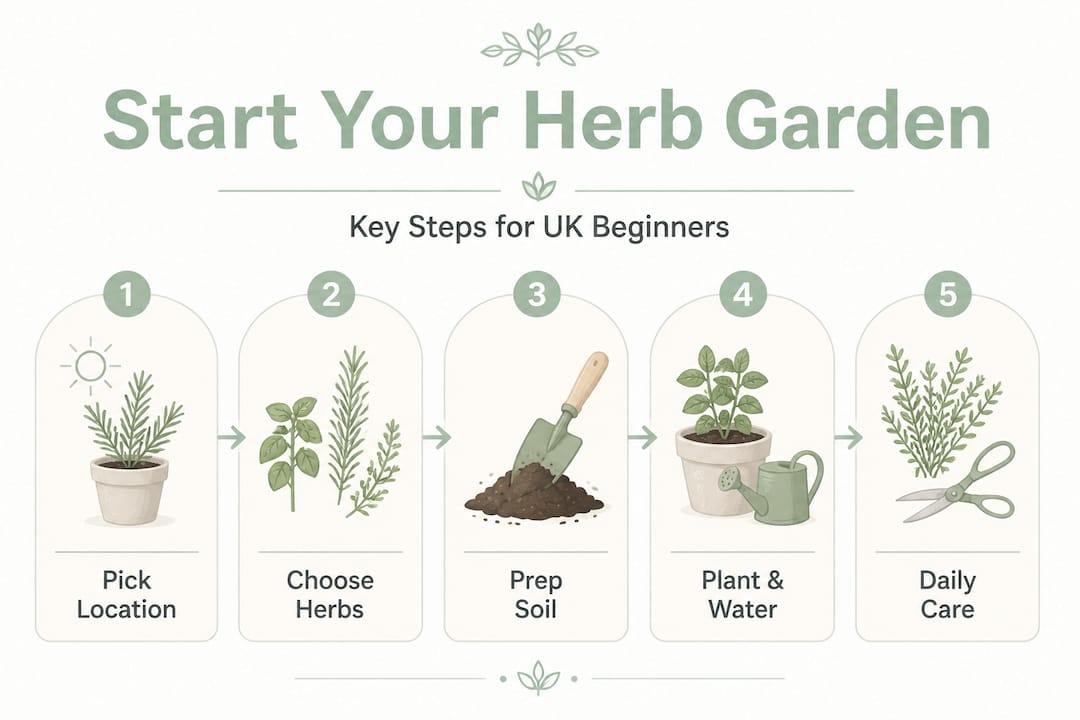
Best beginner herbs for UK growing conditions:
The RHS highlights lemon balm, chamomile, calendula, sage, mint, lavender, and rosemary as the most reliable medicinal herbs for UK beginners. Each one is forgiving, useful, and relatively easy to find as young plants or seeds.
| Herb | Primary medicinal use | Growing habit |
|---|---|---|
| Lemon balm | Calm, sleep support, digestion | Hardy perennial |
| Chamomile | Relaxation, skin soothing | Annual or perennial |
| Calendula | Skin healing, anti-inflammatory | Hardy annual |
| Sage | Throat support, digestion | Hardy perennial |
| Peppermint | Digestion, headaches | Hardy perennial |
| Lavender | Stress relief, sleep | Hardy perennial |
| Rosemary | Memory, circulation | Hardy perennial |
You can explore Roman chamomile benefits and even lesser-known options like ground ivy for UK gardens as your confidence grows.
When it comes to starting your plants, young plug plants are the most beginner-friendly option. Seeds take longer and need more attention. Cuttings work well for established gardeners. If you want a ready-made selection, a starter herb plant kit takes the guesswork out of choosing.
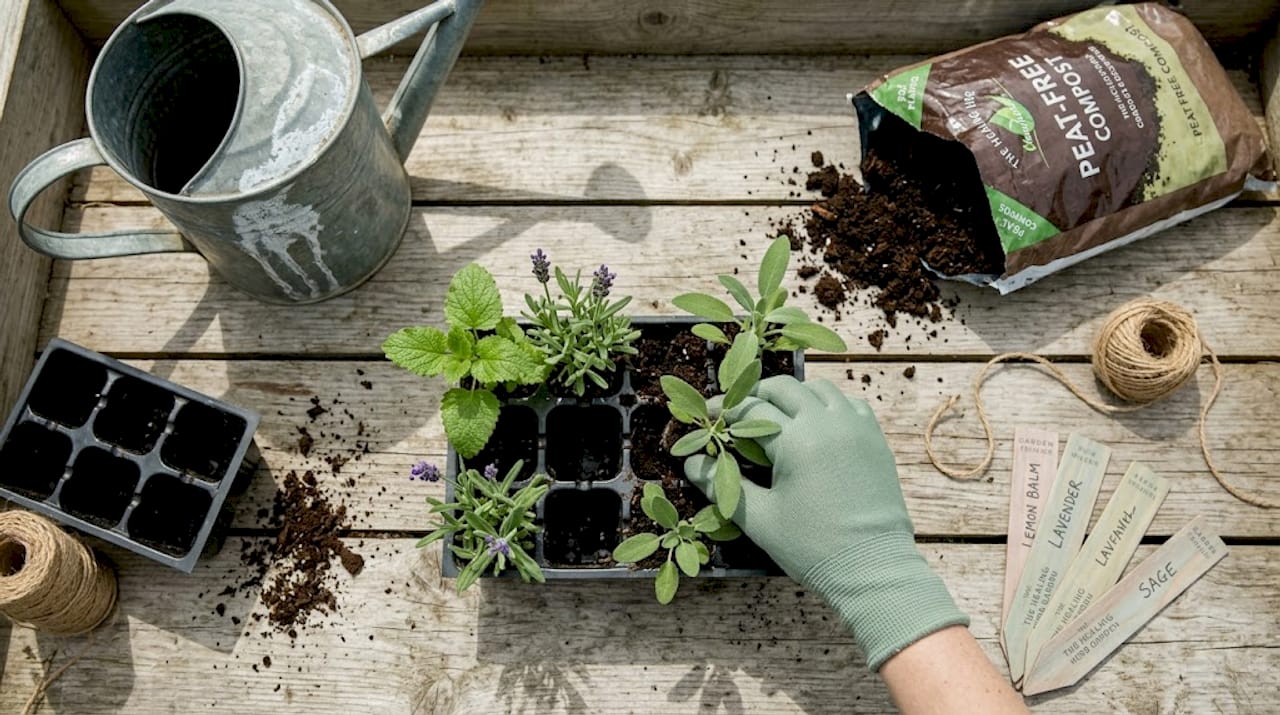
Pro Tip: Start with just three to five herbs you’ll genuinely use. A small, thriving collection is far more satisfying than a large, struggling one.
Step-by-step: Setting up your herb garden
With your tools and materials ready, setting up is straightforward if you follow time-tested steps that work specifically for UK gardens.
The UK climate brings specific challenges: wet winters, unpredictable springs, and occasional summer droughts. Containers and raised beds are your best friends here. They give you control over drainage and soil quality that you simply don’t have in open ground.
The RHS advises using containers or raised beds for beginners in the UK, particularly for invasive herbs like mint and lemon balm that will spread aggressively if planted directly in the ground.
Step-by-step setup guide:
- Choose your containers. Pick pots that are at least 20 to 30 cm deep. Terracotta breathes well and looks beautiful, but plastic retains moisture longer, which can be useful in summer.
- Add drainage material. Place a layer of crocks (broken pot pieces) or gravel at the bottom of each container before adding compost. This prevents waterlogging.
- Mix your compost. Combine peat-free compost with about 20 to 30% horticultural grit. This mimics the free-draining conditions most Mediterranean herbs prefer.
- Plant your herbs. Firm each plant in gently, leaving space for growth. Water in well after planting.
- Label everything. Young herb plants look surprisingly similar. Labels save a lot of confusion.
- Position your pots. Place them in your sunniest, most sheltered spot. A south-facing wall provides warmth and wind protection.
Timing matters. The RHS recommends starting in spring, between March and May, after the last frost. You can sow seeds like basil and parsley indoors from late February. Hardy perennials like sage, mint, and lemon balm can be bought as young plants or divided from existing clumps and planted out from March onward.
| Method | Best for | Timing |
|---|---|---|
| Seeds indoors | Basil, parsley, chamomile | February to April |
| Plug plants | Lemon balm, sage, mint, lavender | March to June |
| Division | Mint, lemon balm, chives | March or September |
A healing garden plant kit is a simple way to skip the seed-starting stage entirely and get straight to growing.
Pro Tip: Place your pots where you’ll see them every day, near the kitchen door or on a patio you use regularly. Daily visibility means you’ll water, check, and harvest far more consistently.
Caring for your herb garden: Water, feed, harvest, and troubleshoot
Once your herbs are growing, care is straightforward but has a few UK-specific pitfalls you can easily avoid.
The most common mistake beginners make is overwatering. It feels caring to water frequently, but most medicinal herbs prefer to dry out slightly between waterings. The RHS guidance is clear: water to keep moist but not waterlogged, feed with a balanced fertiliser sparingly, and harvest by pinching the growing tips regularly.
Keep herbs moist but never soggy. Roots rot if left in waterlogged soil, and this is the number one reason beginner herb gardens fail.
Key care routines:
- Watering: In summer, check containers every one to two days. In cooler months, water far less. Always test the soil with your finger before watering. If the top centimetre is still damp, wait.
- Feeding: A light liquid feed every two to three weeks during the growing season (April to September) is enough. Avoid overfeeding, as this encourages leafy growth with less flavour and medicinal potency.
- Harvesting: Pinch off the top two to four leaves regularly. This encourages the plant to branch out and become bushy rather than tall and leggy. Never harvest more than a third of the plant at once.
- Deadheading: Remove spent flowers from chamomile and calendula to extend the flowering season and encourage more blooms.
Troubleshooting common problems:
- Leggy, pale growth: Not enough light. Move the pot to a sunnier spot.
- Yellow leaves: Usually overwatering or poor drainage. Check the soil and improve drainage.
- Aphids: Spray with a diluted soap solution or introduce natural predators like ladybirds.
- Mildew on leaves: Improve air circulation and avoid wetting the foliage when watering.
The RHS also notes that invasive spreaders like mint and lemon balm should always be kept in pots, poor drainage is best addressed with raised beds or added grit, and pots need protection during wet UK winters.
For herbs that need extra shelter through cold months, consider winter protection for herbs and explore hardy perennial herbs that naturally withstand British winters with minimal fuss.
Pro Tip: For mint and lemon balm, always grow them in separate containers. Both are vigorous spreaders that will crowd out every other plant if given open ground.
Overwintering and expected results: Protecting and using your herbs
Proper ongoing care sets your garden up for lasting results. Here’s how to keep it thriving through all seasons and make the most of your homegrown herbs.
One of the most reassuring things about growing medicinal herbs in the UK is how resilient many of them are. Hardy perennials like sage, mint, lemon balm, and lavender will die back in winter but reliably regrow each spring with very little help from you. This is a significant advantage over annual vegetables, which need replanting every year.
The RHS confirms that hardy perennials die back but regrow reliably in spring. Wrapping pots in horticultural fleece or bubble wrap during very cold spells protects roots from freezing. Supermarket herbs, by contrast, are often grown in stressed, overcrowded conditions and frequently fail when moved outdoors, which is why sourcing plants from specialist growers makes a real difference.
What to expect from your herbs:
- Year one: Focus on establishment. Plants may be small. Harvest lightly and let them settle in.
- Year two onward: Most perennials become significantly more productive. Lemon balm, mint, and sage can be harvested heavily and will still return vigorously.
- Annuals like calendula and chamomile: These need replanting each year but often self-seed, meaning new plants appear without any effort from you.
Overwintering your potted herbs:
- Move tender herbs like basil indoors before the first frost.
- Wrap pots of lavender and rosemary in fleece if temperatures drop below minus five degrees Celsius.
- Cut back dead growth on perennials in late autumn but leave some stem for protection.
- Raise pots off the ground using pot feet to prevent waterlogging.
For extra peace of mind through colder months, explore options for protecting herbs in winter.
Using your harvest:
Once you’re picking regularly, the possibilities are genuinely exciting. Research from Melissa K. Norris outlines multiple practical uses: fresh leaves and flowers for teas, salves, and infusions; dried herbs for long-term storage; and tinctures for more concentrated remedies. Always research safe dosages and any precautions before using herbs medicinally, especially if you take prescription medication.
- Teas: Steep fresh or dried lemon balm, chamomile, or peppermint leaves in boiling water for five to ten minutes.
- Infused oils: Pack calendula flowers into a jar of olive oil and leave in a sunny spot for four to six weeks. Use as a skin-soothing salve base.
- Drying: Tie small bunches and hang upside down in a warm, airy room. Store dried herbs in labelled glass jars away from direct light.
- Fresh use: Add sage and rosemary to cooking for both flavour and their natural wellness benefits.
What UK beginners need to know: The real secrets to herb garden success
Now that you’ve seen how to nurture and use your healing herbs, let’s step back and share what truly makes a beginner’s UK herb garden thrive, beyond the usual advice.
Here’s something we’ve noticed time and again: the biggest obstacle isn’t the weather, the soil, or even the plants. It’s trying to do too much at once. Beginners who start with ten different herbs often end up overwhelmed, and the garden gets neglected. Those who start with three herbs they genuinely love tend to build real confidence and expand naturally.
Containers are genuinely transformative for UK beginners. They’re not a compromise. They give you control over drainage, soil quality, and positioning that open ground simply can’t match. The RHS consistently points to containers as the smart solution for UK conditions, particularly for managing invasive herbs, poor drainage, and wet winters. This isn’t just practical advice. It’s the foundation of a garden that actually works.
Another insight worth sharing: the overlap between medicinal herbs and culinary herbs is one of the best-kept secrets in herb gardening. Sage, rosemary, thyme, and mint are all kitchen staples and natural remedies. When your herbs serve double duty in the kitchen and the medicine cabinet, nothing goes to waste. You harvest more often, the plants stay healthy, and you build an intuitive relationship with each one.
You don’t need to be “green-fingered” to succeed. The right setup, meaning good drainage, enough sun, and the right starting herbs, covers about 80% of what determines success. Starting with easy growers like lemon balm builds the kind of confidence that makes everything else feel manageable.
Pro Tip: Pick your three most-used herbs, whether that’s chamomile for sleep, lemon balm for calm, or calendula for skin care, and learn those well before adding anything new. Depth beats breadth every time when you’re starting out.
Ready to start your healing herb garden?
Feeling ready to plant your first seeds or select healing herb plugs? Here’s how to get started with confidence.
At The Healing Herb Garden, we’ve made it simple to begin. Whether you want a single plant to try or a full collection to build your home remedy garden, we have everything you need, organically grown and ready to thrive in UK conditions.
Explore our monthly healing herb plug plants and receive carefully selected herbs delivered to your door each month, perfect for building your collection gradually and with confidence. If you’d prefer to start with a curated selection, our wild herb meadow collection kit brings together a beautiful range of healing herbs chosen specifically for UK beginners. Every plant comes with guidance so you know exactly what to do from the moment it arrives. Your healing herb garden starts here.
Frequently asked questions
What are the easiest medicinal herbs for a UK herb garden?
Lemon balm, chamomile, calendula, sage, peppermint, lavender, and rosemary are the most reliable choices for UK beginners, as they are forgiving, hardy, and genuinely useful as home remedies.
Can I grow medicinal herbs indoors in the UK?
Yes. You can start seeds indoors from late February, and herbs like basil, parsley, and even mint grow well on a sunny south-facing windowsill throughout the year.
How do I prevent mint from taking over my garden?
Always grow mint in a container. The RHS recommends keeping invasive spreaders like mint and lemon balm in pots at all times to prevent them from crowding out other plants.
Do herbs need special soil or compost in the UK?
Use peat-free, gritty compost mixed with horticultural grit for best results, especially in containers or raised beds where drainage is essential for healthy roots.
How should I use my medicinal herbs after harvest?
Use fresh herbs for teas, infusions, or salves, and dry leaves for long-term storage. Always research safe dosages and any precautions before using herbs as remedies, particularly if you take other medications.
Recommended
- Beginner Healing Herb Garden Kit – 6 Traditional Herb Plants UK Grow – The Healing Herb Garden
- The Healing Herb Garden | Herb Seed Kits UK & Medicinal Herb Plants
- Wild Healer Herb Trio– Plant Kit – The Healing Herb Garden
- Women’s Wellness Garden – Herb Plant Kit – The Healing Herb Garden
Article generated by BabyLoveGrowth
More from The Herb Garden Journal
Ready to start growing?
Our Beginner Healing Herb Garden Kit is the easiest way to get started — hand-selected plug plants, ready to grow, with everything you need to build your first herb garden.
Shop the Beginner Kit →

0 comments