

Growing your own medicinal herbs sounds simple until you’re standing in front of dozens of options, unsure which ones actually thrive in the UK climate, fit your space, or deliver real wellness benefits. The right selection makes all the difference. Choose well, and you’ll have a productive, low-maintenance healing garden that supports your health through every season. Choose poorly, and you’ll end up with leggy, frost-damaged plants that never quite deliver. This guide cuts through the noise, helping you pick the best medicinal herbs for home growing, understand their care needs, and build a garden that genuinely works for you.
Table of Contents
- What to consider before growing herbs for natural healing
- 7 easy medicinal herbs to grow at home in the UK
- Comparison: Which herbs suit your space and lifestyle?
- Getting the most from your home herb garden: Tips for year-round abundance
- Why less is more: The real trick to successful home herb growing
- Start your healing herb journey with expert-curated kits
- Frequently asked questions
Key Takeaways
| Point | Details |
|---|---|
| Start safe and simple | Begin with a few easy-care, well-known herbs and always research their medicinal uses first. |
| Tailor to your space | Container gardening and windowsill setups make it easy to grow wellness herbs even in small UK homes. |
| Year-round care matters | Protect sensitive herbs by bringing them indoors or under cover in winter for continuous supply. |
| Less is more | Growing fewer, robust herbs often gives better wellness benefits and gardening satisfaction. |
| Kits can help beginners | Curated herb kits take out the guesswork and boost early success for home gardeners. |
What to consider before growing herbs for natural healing
Now that you know why growing your own herbs is appealing, let’s get practical about choosing what and how to grow safely.
Before you buy a single plant, take a moment to think through a few key factors. Growing medicinal herbs is deeply rewarding, but going in without a plan leads to wasted effort and disappointing results. Medicinal plants can be grown for home wellbeing, but research and safety are essential before you start using them.
Safety comes first. Some herbs interact with medications or are not suitable during pregnancy. If you have an existing health condition, always check with a qualified herbalist or your GP before using homegrown plants medicinally. This is especially important for herbs like sage and rosemary, which are potent in concentrated forms.
Think about your growing space. UK gardens vary enormously. A south-facing windowsill in a flat is very different from a sheltered garden border in Somerset. Consider:
- How much direct sunlight your space gets each day
- Whether your soil drains well or tends to stay wet
- How much room you have for pots, raised beds, or borders
- Whether you can bring containers indoors during cold snaps
Start simple. Resist the urge to grow fifteen different herbs at once. A focused selection of four to six well-chosen plants will serve you far better than an overcrowded, hard-to-manage collection. Explore our herb seed kits UK for curated options that take the guesswork out of getting started.
“The most important step is choosing herbs that suit your conditions, not just herbs you’ve read about online. Match the plant to your space, and you’re already halfway to success.” — Bryony the Gardener
Pro Tip: Place containers on a south or west-facing wall for maximum warmth and light. Even a small patio or balcony can support a productive medicinal herb collection with the right placement.
If you’re brand new to this, our beginner healing garden kit is a great starting point. It removes the guesswork and gives you plants that are already suited to UK conditions.
7 easy medicinal herbs to grow at home in the UK
With key safety and growing factors covered, discover the herbs that best fit a UK home wellness garden.
Each of these herbs has a strong track record for both ease of growing and genuine wellness benefits. They’re all accessible, forgiving for beginners, and well-suited to the UK’s variable climate.
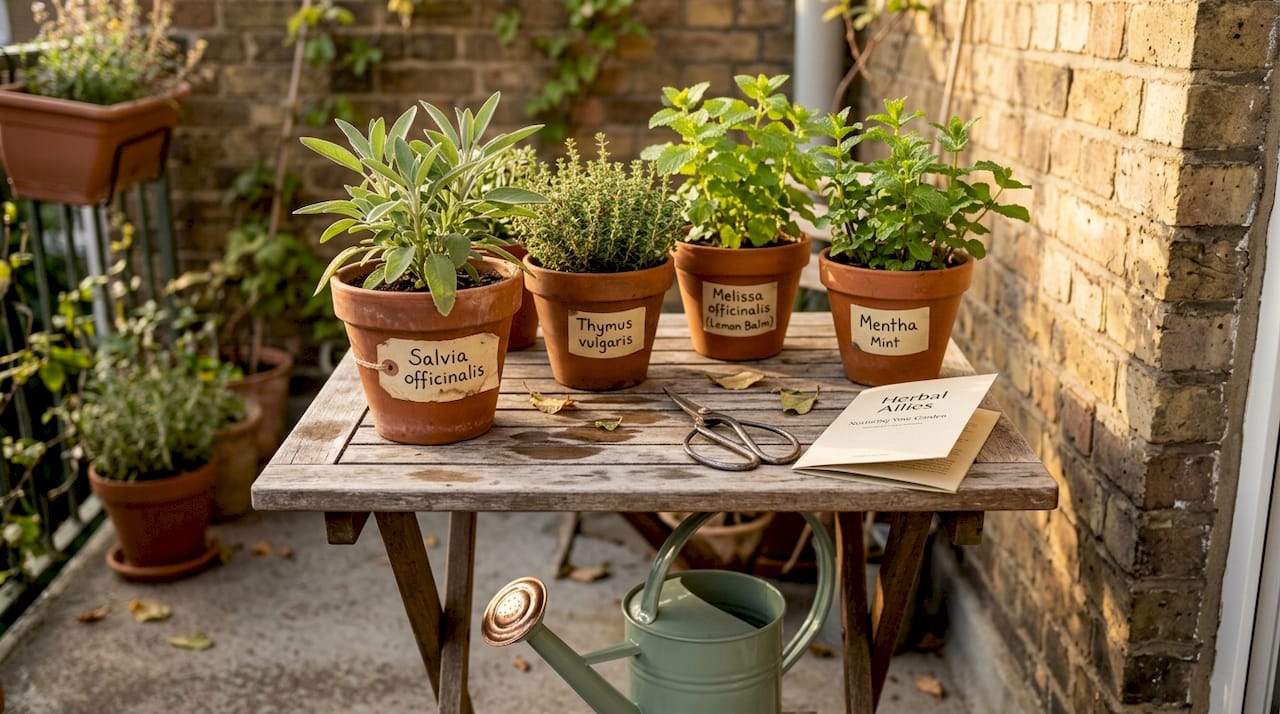
1. Basil Basil is warming, aromatic, and traditionally used to support digestion and calm mild stress. In the UK, basil grows best in containers or indoors on a bright windowsill, as it needs warmth and sunshine that the British outdoors doesn’t always guarantee. Keep it away from cold drafts and water at the base, not the leaves.
2. Mint Mint is one of the most versatile healing herbs you can grow. It’s used for digestive support, headaches, and as a soothing tea. It’s also incredibly easy to grow. The main caution: mint spreads aggressively, so always grow it in a container to keep it contained. Our mint trio plant kit gives you three distinct varieties, including chocolate mint, apple mint, and spearmint, for a range of flavors and uses.
3. Rosemary Rosemary is a hardy, drought-tolerant herb with a long history in traditional medicine. It’s linked to improved circulation and memory support. Hardy herbs like rosemary can live outside all year once established, making it one of the most low-maintenance choices for UK growers.
4. Sage Sage has been used for centuries to support throat health, digestion, and hormonal balance. It’s particularly valued in women’s wellness traditions. Grow it in a sunny, well-drained spot and it will reward you with silvery aromatic leaves year after year.
5. Thyme Thyme is a powerhouse for respiratory and immune support. It contains thymol, a natural compound with strong antimicrobial properties. Like rosemary and sage, thyme is hardy enough to stay outdoors through UK winters once it’s established.
6. Chamomile Chamomile is beloved for its calming properties and is one of the most widely used herbs for sleep and anxiety support. Chamomile is easy to grow from seed, suitable for containers, and flowers in as little as ten weeks. Our Roman chamomile plant is a beautiful, fragrant groundcover that also attracts pollinators.
7. Lemon balm Lemon balm is a gentle, mood-lifting herb with a fresh citrus scent. It’s traditionally used for stress, anxiety, and sleep. Lemon balm is hardy, easy to grow in sun or partial shade, but should be container-grown to prevent it from spreading across your garden.
Pro Tip: For sleep support, try combining lemon balm and chamomile as a fresh herbal tea. Grow both in containers side by side for easy access in the evening.
If you’re interested in deeper wellness support, consider adding a valerian plant to your collection. Valerian root is one of the most studied herbs for sleep and relaxation, and it grows well in UK conditions with minimal fuss.
A note on medicinal use: Always use herbs in appropriate amounts. More is not always better. Research each herb’s recommended preparation and dosage before using it regularly for wellness purposes.
Comparison: Which herbs suit your space and lifestyle?
You’ve seen individual herb profiles. Now compare them at a glance to match your available space and time.
| Herb | Light needed | Space | Care level | Winter hardy (UK) | Key wellness use |
|---|---|---|---|---|---|
| Basil | Full sun | Small pot | Moderate | No (bring indoors) | Digestion, stress |
| Mint | Sun/partial shade | Container only | Easy | Yes | Digestion, headaches |
| Rosemary | Full sun | Medium pot/border | Very easy | Yes | Circulation, memory |
| Sage | Full sun | Medium pot/border | Easy | Yes | Throat, hormonal balance |
| Thyme | Full sun | Small pot/border | Very easy | Yes | Immune, respiratory |
| Chamomile | Full sun | Small pot | Easy | Annual (reseed) | Sleep, calm |
| Lemon balm | Sun/partial shade | Container only | Easy | Yes | Stress, sleep |
Most UK herbs need full sun or good light and well-drained conditions. If you’re growing in containers, use deep pots with drainage holes, protect from freezing, and avoid letting the soil dry out completely or become waterlogged.
Best picks for small spaces and windowsills:
- Basil (indoor windowsill, south-facing)
- Thyme (compact, thrives in small pots)
- Chamomile (neat, container-friendly)
Best picks for outdoor gardens and borders:
- Rosemary (shrubby, drought-tolerant)
- Sage (beautiful foliage, low maintenance)
- Lemon balm (in a contained bed or large pot)
Best for busy lifestyles (lowest maintenance):
- Thyme
- Rosemary
- Sage
These three need very little attention once established. They tolerate dry spells, don’t need frequent feeding, and stay productive for years.
Winter protection strategies include bringing pots indoors or using a greenhouse or coldframe, which acts as a useful buffer between the warmth of indoors and the cold of outside. This is especially helpful for borderline-hardy herbs like lemon balm in colder parts of the UK.
Pro Tip: Add a layer of grit to the surface of your herb containers. It improves drainage, reduces waterlogging, and helps prevent root rot during wet UK winters.
For ground-level coverage in a larger garden, ground ivy is a traditional healing herb that spreads naturally and works beautifully as a low-maintenance ground cover with a long history in herbal medicine.
Getting the most from your home herb garden: Tips for year-round abundance
After choosing your ideal herbs, maximize your garden’s wellness potential year-round with these expert-backed tips.
A medicinal herb garden doesn’t have to go dormant in autumn. With a little planning, you can keep harvesting and growing through most of the year.
Follow a seasonal rhythm:
- January to March: Start basil and chamomile seeds on a warm windowsill. Check overwintering pots for root health.
- April to May: Move seedlings outside gradually. Plant out hardy herbs once frost risk passes.
- June to August: Harvest regularly to encourage fresh growth. Dry or freeze surplus herbs for winter use.
- September to October: Take cuttings of rosemary and sage for propagation. Begin moving tender herbs indoors.
- November to December: Bring pots of hardy herbs under glass in autumn. Use greenhouses or coldframes as a step between indoor and outdoor environments.
Monthly care summary:
| Month | Key task |
|---|---|
| Jan/Feb | Sow basil indoors, check drainage on outdoor pots |
| March | Start chamomile seeds, check for new growth on perennials |
| April | Harden off seedlings, plant out after last frost |
| May/June | Begin regular harvesting, feed with liquid seaweed |
| July/Aug | Harvest at peak, dry surplus, water consistently |
| Sept | Take cuttings, reduce watering |
| Oct/Nov | Move tender herbs indoors, add mulch to border herbs |
| Dec | Rest period, plan next year’s growing |
Keep a continuous supply by sowing in trays, bringing pots indoors, and potting up larger herbs before winter sets in. This approach means you’re rarely without fresh healing herbs, even in the depths of a UK winter.
Avoid these common pitfalls:
- Overwatering in autumn and winter is the number one cause of herb plant death
- Overcrowding pots reduces airflow and invites disease
- Harvesting too little actually weakens plants over time. Regular, moderate harvesting keeps them bushy and productive
Our wild herb meadow collection is a wonderful option if you want to create a more naturalistic healing space that supports pollinators and provides a range of medicinal plants across the seasons.
“A well-tended herb garden doesn’t need to be large to be productive. A few containers, tended consistently, will outperform a neglected border every time.” — RHS growing guidance
Why less is more: The real trick to successful home herb growing
Finally, let’s look honestly at what really works and what doesn’t when growing herbs for natural healing at home.
Here’s something the herb gardening world doesn’t say often enough: growing too many herbs at once is one of the most common reasons people give up. It’s easy to get excited, order ten different plants, and then feel overwhelmed when they all need different care at different times. The result is usually stressed plants, stressed growers, and a lot of guilt.
The truth is, focusing on a handful of easy, high-impact herbs rather than crowding your space with too many options is the approach that actually works. We’ve seen this pattern repeatedly. A grower who tends three herbs with real attention and care will always get better results, and better wellness outcomes, than someone who neglects fifteen.
Think about what you actually want from your herb garden. Is it a calming evening tea? Grow chamomile and lemon balm well. Is it immune support through winter? Thyme and sage, grown confidently, will serve you far better than a chaotic mix of half-thriving plants.
There’s also something genuinely meaningful about building a close relationship with a small number of plants. You start to notice when they need water before the soil even looks dry. You learn how they smell at different times of day. That kind of attentiveness is itself a wellness practice.
Our wild healer trio kit is a perfect example of this philosophy in action. Three powerful, traditional healing herbs, chosen to work together, simple to grow, and deeply rooted in herbal tradition. It’s a focused, intentional starting point that builds real confidence.
Quality over quantity is not just a gardening principle. It’s a wellness one too.
Start your healing herb journey with expert-curated kits
Ready to get growing? Start with an expertly chosen set for more success and confidence.
Choosing the right plants is the hardest part of starting a medicinal herb garden. We’ve done that work for you. At The Healing Herb Garden, every kit is carefully selected to give you the best chance of success, whether you’re growing on a windowsill, a balcony, or a full garden border.
Our monthly healing herb plug plants subscription lets you build your healing herb garden steadily, one well-chosen plant at a time. No overwhelm, just steady, satisfying progress. If you’re focused on women’s health and hormonal wellness, our Women’s wellness herb kit brings together herbs with a long tradition of supporting female wellbeing, all organically grown and ready to plant. Every kit comes with clear guidance so you know exactly how to care for what you’re growing.
Frequently asked questions
Which medicinal herbs grow outdoors year-round in the UK?
Hardy perennial herbs including mint, oregano, rosemary, thyme, and sage can survive outside year-round once established, making them ideal low-maintenance choices for UK growers.
Is it safe to use homegrown herbs for medicinal purposes?
Homegrown herbs can genuinely support wellness, but always research each herb’s uses and consult a qualified professional if you have a health condition or are pregnant. Research and safety are essential before using any plant medicinally.
How can I keep my herb plants alive through winter in the UK?
Bring tender herbs indoors before the first frost and use a greenhouse or coldframe for hardier varieties. Winter protection strategies like these prevent freezing and waterlogging, the two most common causes of winter herb loss.
What is the best way to use containers for herb gardening at home?
Choose deep containers with drainage holes and add grit to the compost mix. Deep containers and good drainage help herbs thrive through wet UK winters and prevent the root rot that kills so many container-grown plants.
Recommended
- Gypsywort – For Herbal Wellness & Wildlife-Friendly Gardens – The Healing Herb Garden
- Black Mint Plant |HerbalTeas | Organic Herb Plug UK – The Healing Herb Garden
- Wild Healer Herb Trio– Plant Kit – The Healing Herb Garden
- Monthly Healing Herb Plug Plants | Build Your Healing Herb Garden – The Healing Herb Garden