

Buying a few herb plants, tucking them into a sunny corner, and hoping for the best is how most UK beginners start their medicinal herb gardening journey. And it’s also how most of them end up disappointed. Soggy roots, leggy growth, mint taking over everything, and chamomile that just gives up. The problem is rarely effort. It’s design. A thoughtfully planned medicinal herb garden, built around the real needs of each plant and the realities of UK weather, produces reliable harvests and genuine healing potential from your own backyard.
Table of Contents
- Core principles of herb garden design
- Choosing and grouping medicinal herbs
- Layout strategies: beds, containers, and spirals
- Arranging herbs for health, harvest, and beauty
- Medicinal safety and self-sufficiency tips
- Why most UK herb gardens struggle—and the simple shift that works
- Grow your own healing herb garden with confidence
- Frequently asked questions
Key Takeaways
| Point | Details |
|---|---|
| Sunlight and soil matter | Medicinal herbs thrive with full sun and well-drained soil, so choose your garden spot carefully. |
| Group herbs by needs | Arrange herbs with similar water and sun requirements together for healthier growth and easier care. |
| Choose practical layouts | Raised beds and large containers help manage drainage and keep invasive herbs under control. |
| Prioritize safety | Always research medicinal uses and possible interactions—grow with intention and label your plants clearly. |
| Start small, expand later | Begin with a few easy herbs to build confidence, then add more as your skills and garden mature. |
Core principles of herb garden design
Most herb gardens fail before a single seed germinates, simply because the basics are skipped. Sunlight, soil drainage, site placement, and smart grouping are the four pillars that hold everything together. Get these right, and you’re already ahead of most beginners.
Sunlight is non-negotiable. Most herbs need full sun for 6 to 8 hours daily, and this applies whether you’re growing lavender for calm or echinacea for immunity. A shady corner simply won’t do.
Soil matters just as much. Aim for well-drained soil with a pH between 6.0 and 7.5. Many UK gardens sit on heavy clay, which holds water and suffocates herb roots. The solution is simple: raised beds or containers are far better for Mediterranean and medicinal herbs in a wet UK climate than planting directly into clay ground.
Site selection is often overlooked. Place your herb garden within about 5 meters of your kitchen door. You’ll harvest more often when it’s convenient. Proximity encourages daily interaction, which means you’ll notice problems early and pick herbs at their peak potency.
Grouping is where beginners make the most avoidable mistakes. Mediterranean herbs like rosemary, thyme, and sage prefer dry, gritty, nutrient-poor soil. Leafy herbs like mint, parsley, and basil prefer moisture and richer conditions. Planting them together means someone always suffers.
Here are the core principles to keep front of mind:
- Choose a spot with at least 6 hours of direct sun daily
- Prioritize drainage above almost everything else
- Keep the garden close to your kitchen for regular use
- Group plants by water and soil needs, not by alphabet or theme
- Start small with 5 to 8 plants and expand as confidence grows
“A well-placed herb garden is one you actually use. Proximity to the kitchen is as important as sunlight. If it’s inconvenient to reach, you won’t harvest consistently, and the whole purpose is lost.”
Pro Tip: If your garden soil is heavy clay, build a simple raised bed with a 30cm depth of mixed topsoil and grit before you plant a single herb. This one step prevents the majority of drainage-related failures.
A great starting point is a herb starter kit that takes the guesswork out of which plants to choose and how to get them growing together.
Choosing and grouping medicinal herbs
With the site and overall plan settled, it’s time to pick the best herbs for healing and learn why grouping matters for plant health and your harvests.
Start with 3 to 5 herbs that serve clear purposes. This keeps things manageable and helps you learn each plant’s habits before adding more. Once those are thriving, expansion feels natural rather than overwhelming.
When it comes to medicinal use, certain herbs are consistently recommended for beginners. Prioritize chamomile, lemon balm, calendula, echinacea, lavender, yarrow, and peppermint for teas, salves, digestion support, skin care, and immunity. These seven cover an impressive range of everyday wellness needs.
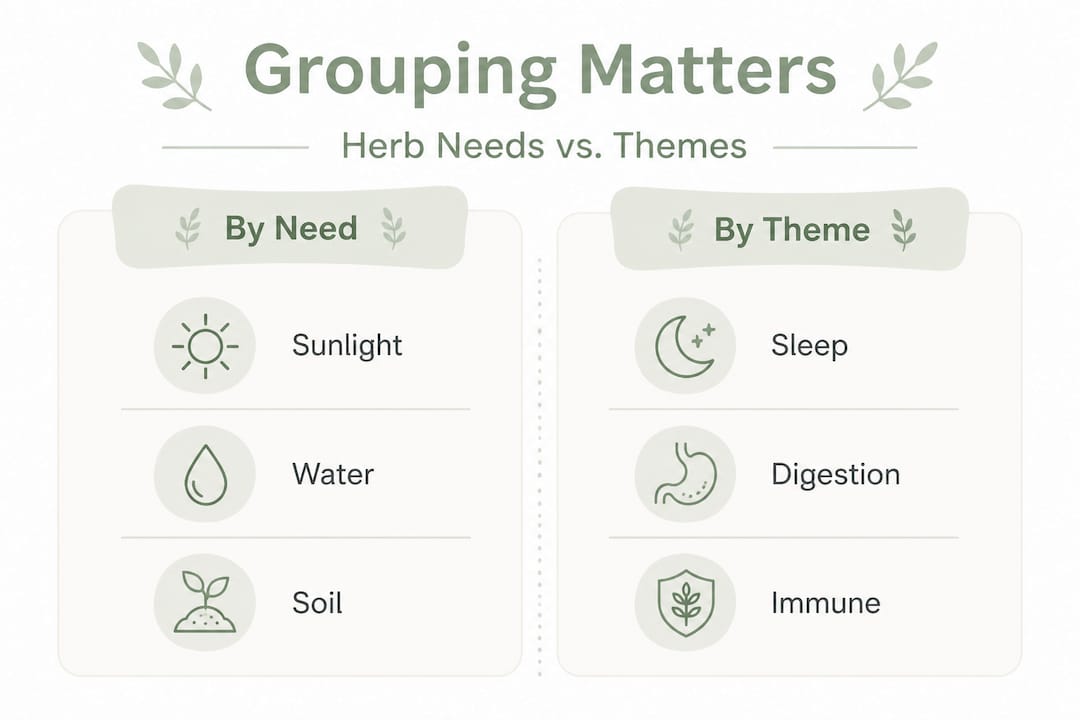
Grouping by need rather than theme is the key principle. Mediterranean herbs like rosemary, thyme, and sage belong in gritty, poor, dry soil. Moisture-loving herbs like mint, parsley, and basil need separate beds with richer, consistently moist conditions. Mixing them leads to overwatering one group while underwatering the other.
| Herb | Type | Medicinal use | Water needs |
|---|---|---|---|
| Chamomile | Annual | Calming teas, digestion | Moderate |
| Lemon balm | Perennial | Stress, sleep, antiviral | Moderate/moist |
| Lavender | Perennial | Anxiety, skin, sleep | Low/dry |
| Calendula | Annual | Skin healing, salves | Moderate |
| Echinacea | Perennial | Immunity support | Moderate |
| Peppermint | Perennial | Digestion, headaches | Moist |
| Yarrow | Perennial | Wound healing, fever | Low/dry |
| Rosemary | Perennial | Memory, circulation | Low/dry |
For annuals like basil and coriander, succession sowing every 3 to 4 weeks keeps fresh growth coming all season. Sow a small batch, wait a few weeks, sow again. This staggered approach means you’re never left with a glut followed by nothing.
Perennials are the backbone of a self-sufficient healing garden. Lemon balm, lavender, echinacea, and yarrow come back year after year with minimal effort. Build your garden around these, then fill gaps with annuals for variety.
- Perennials: plant once, harvest for years
- Annuals: succession sow every 3 to 4 weeks for continuous supply
- Start with 3 to 5 herbs, then expand once they’re established
- Always group by water and soil needs first
Pro Tip: Keep mint and lemon balm in separate containers even within a raised bed. Both are vigorous spreaders and will crowd out neighboring plants if left unchecked.
Explore our monthly medicinal herb selection to build your collection gradually, or try the culinary healing kit if you want herbs that serve both the kitchen and the medicine cabinet.
Layout strategies: beds, containers, and spirals
Once you know which herbs to grow, your next decision is the best way to lay them out for both beauty and practicality. Here’s how.
Each layout option has genuine strengths and trade-offs. Your choice depends on your space, budget, and how much time you want to spend on maintenance.
| Layout | Best for | Cost | Drainage | Ease for beginners |
|---|---|---|---|---|
| Raised bed | Most herbs, clay soil | Medium | Excellent | High |
| Containers/pots | Small spaces, renters | Low to medium | Good | High |
| Herb spiral | Mixed microclimates | Low to medium | Variable | Medium |
| In-ground bed | Sandy/loamy soil only | Low | Poor on clay | Low |
Raised beds are the gold standard for UK medicinal herb gardens. A 30cm deep raised bed, roughly 1.2 meters square, comfortably holds 8 herbs, solves clay drainage problems, and warms up faster in spring. This means earlier growth and longer harvests. You can build one from timber, brick, or even stacked stone.
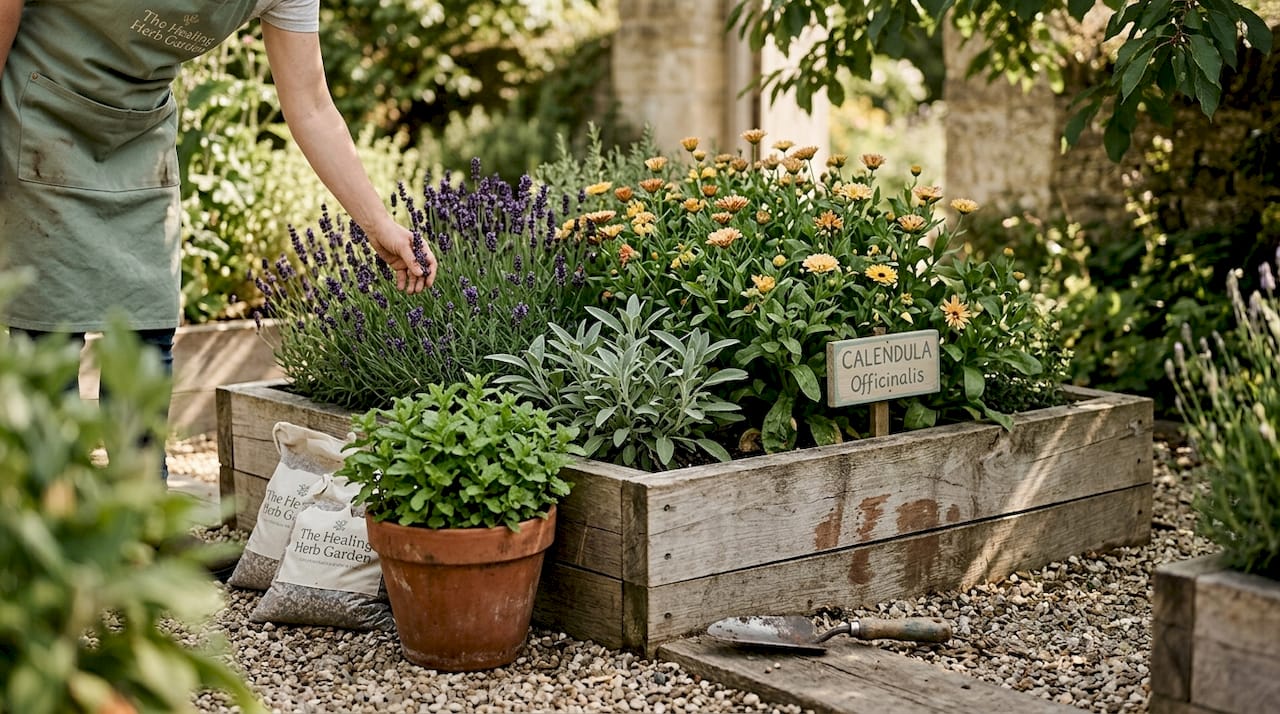
Containers are essential for invasive plants and renters without garden access. Terracotta pots of at least 25cm diameter with drainage holes work well. Elevate them slightly on pot feet to improve airflow beneath and prevent waterlogging. Terracotta is especially good because it breathes, reducing the risk of soggy roots.
Herb spirals are a permaculture design that creates multiple microclimates in a small footprint. Dry conditions at the top suit Mediterranean herbs, while the moist base suits mint or parsley. However, herb spirals can fail in wet UK conditions without careful drainage planning. If you build one, use a gritty mix at the top and ensure the base doesn’t pool water.
Here’s how to set up a simple raised bed for beginners:
- Choose a sunny, level spot within 5 meters of your kitchen
- Build or buy a raised bed frame at least 30cm deep
- Line the base with cardboard to suppress weeds
- Fill with a mix of topsoil, organic compost, and horticultural grit (roughly 60/30/10)
- Group Mediterranean herbs on the drier, sunnier end
- Group moisture-loving herbs on the shadier, more sheltered end
- Label every plant clearly from day one
For renters or those with paved outdoor spaces, a collection of large pots arranged on a sunny patio works just as well as a raised bed. The key is never skipping drainage holes.
Consider adding Meadowsweet for raised beds as a beautiful, traditionally medicinal perennial that thrives with moderate moisture and adds structure to any layout.
Arranging herbs for health, harvest, and beauty
With your garden’s bones in place, arrange your chosen herbs for both maximum health and healing harvests year after year.
Height is your first organizing tool. Tall herbs like rosemary and motherwort belong at the back of a border or the center of a raised bed. Low-growing plants like thyme and chamomile work best at the edges, where they get full light and are easy to harvest without disturbing taller neighbors.
This isn’t just about looks. Taller herbs shading shorter ones reduces yields and can encourage disease. Thoughtful positioning means every plant gets the light it needs.
Here’s a simple arrangement sequence for a 1.2m square raised bed:
- Place the tallest herb (rosemary or echinacea) at the center or back
- Surround with medium-height herbs like lemon balm or calendula
- Edge the bed with low-growing thyme, chamomile, or creeping savory
- Leave at least 30cm between plants to allow airflow and future growth
- Add a label marker for each plant at planting time
Harvest timing matters more than most beginners realize. In year one, keep harvests light for perennials. Let them establish strong root systems. In year two, you can harvest fully and regularly. Rushing this process weakens plants and reduces their long-term productivity.
Companion planting adds another layer of benefit. Calendula planted near other herbs repels aphids naturally. Lavender attracts pollinators that benefit the whole garden. Chamomile is sometimes called the “physician plant” because it seems to improve the health of nearby herbs, possibly through root secretions that support soil biology.
“Your herb garden is a living system. The more you work with each plant’s natural habits rather than against them, the less maintenance you’ll need and the more healing you’ll harvest.”
Pro Tip: Harvest herbs in the morning after the dew has dried but before the midday heat. Essential oil content is highest at this point, which means more potency in your teas, tinctures, and salves.
A perennial herb kit is a smart way to build the structural backbone of your healing garden with plants that return reliably every year.
Medicinal safety and self-sufficiency tips
A thriving garden is only as valuable as its safe, effective use. Make your herbs part of a healthy, self-sufficient routine.
Succession sowing, companion planting, and perennials reduce replanting effort and keep your supply consistent across the seasons. This is the foundation of genuine self-sufficiency. Rather than planting everything at once, stagger your sowings and rely on perennials to carry the garden through leaner months.
Harvest with intention. Know before you cut whether you’re making a tea, a salve, a tincture, or a dried remedy. Different preparations use different plant parts and require different harvesting approaches. Calendula flowers go into skin salves. Peppermint leaves go into digestive teas. Echinacea roots and aerial parts support immunity differently depending on preparation.
Safety is essential. Research potential interactions carefully, especially if you’re pregnant, breastfeeding, or taking prescription medication. Herbs are powerful. That’s exactly why they work. But it also means they can interact with medications or affect certain health conditions. Always consult a qualified herbalist or your GP before using herbs medicinally in high doses.
Key self-sufficiency habits to build from day one:
- Keep a simple garden journal to track sowing dates, harvests, and plant health
- Label every plant and every dried herb container clearly
- Dry herbs in small batches and store in airtight glass jars away from light
- Note which preparations you make and how they work for you
- Review your plant list each autumn and plan what to add or replace
Pro Tip: A simple notebook kept near your garden door becomes invaluable over time. Record what you planted, when you harvested, and what you made. This turns one season’s experience into years of accumulated knowledge.
Explore Gypsywort for wildlife gardens as a native medicinal herb that supports both your healing practice and local biodiversity.
Why most UK herb gardens struggle—and the simple shift that works
Here’s something most herb gardening guides won’t tell you directly: the traditional approach of organizing a medicinal garden by ailment is one of the main reasons UK beginners fail.
Historic physic gardens were themed by ailment, grouping plants for respiratory conditions together, wound herbs in another bed, digestive herbs in another. It’s a beautiful concept rooted in centuries of tradition. But it completely ignores what plants actually need to survive. A respiratory herb bed might contain moisture-loving elecampane alongside drought-tolerant thyme. In a UK garden with unpredictable rainfall, one of them will always struggle.
The shift that works is simpler than any theme. Group by sunlight and water needs first. Let medicinal purpose be secondary. A bed of Mediterranean herbs, all dry-loving and sun-hungry, will thrive together and produce reliable harvests. A separate moist, sheltered bed for lemon balm, mint, and meadowsweet will do the same. Both beds serve healing purposes. They just do it by working with nature rather than imposing a concept onto it.
The second most common failure is starting with too many plants. Ten herbs planted by an overwhelmed beginner will underperform compared to five herbs given proper attention. Mastery of a small collection builds confidence and genuine skill. Then expansion feels exciting rather than stressful.
The mind-set shift is this: success in a medicinal herb garden comes from building a system, not from the size of your collection or the elegance of your theme. A simple, well-maintained garden of six thriving herbs will serve your health better than twenty struggling ones.
Starting small with healing herbs and building from a solid foundation is always the more reliable path.
Grow your own healing herb garden with confidence
Ready to apply these principles in your own garden? These resources make the next step simple.
At The Healing Herb Garden, we’ve done the hard work of selection for you. Our curated kits bring together organically grown, beginner-friendly herbs chosen specifically for UK conditions and medicinal use. Each kit includes clear guidance so you know exactly where to plant, how to care for each herb, and when to harvest.
Our monthly healing herb plug plants let you build your collection at a pace that suits you, adding new plants as your confidence grows. Or start with everything you need in one go with the beginner healing garden kit, designed to give new growers a strong, healthy foundation from day one. No guesswork. No wasted plants. Just a thriving medicinal garden you can trust.
Frequently asked questions
How much sunlight do medicinal herbs need in the UK?
Most medicinal herbs need at least 6 hours of direct sunlight daily, even in the UK. Choose the sunniest spot available in your garden.
What’s the easiest design for a beginner medicinal herb garden?
A small raised bed or grouping of large pots is ideal for drainage and accessibility. A 30cm deep raised bed around 1.2 meters square comfortably holds 8 herbs and solves most UK drainage problems.
Which herbs are essential for a basic healing garden?
Chamomile, lemon balm, calendula, echinacea, lavender, yarrow, and peppermint cover the most common wellness needs, from digestion and skin care to immunity and stress relief.
Do I need special soil for a medicinal herb garden?
Use well-drained soil with a pH of 6.5 to 7.5. Raised beds or containers are the most practical solution for UK gardens with heavy clay soil.
Are there safety risks with homegrown medicinal herbs?
Yes. Always research potential interactions before using herbs medicinally, and never substitute them for professional medical advice, particularly if you are pregnant or taking prescription medication.
Recommended
- Monthly Healing Herb Plug Plants | Build Your Healing Herb Garden – The Healing Herb Garden
- The Healing Herb Garden | Herb Seed Kits UK & Medicinal Herb Plants
- Valerian Plug Plant - Herb Plants and Natural Solutions – The Healing Herb Garden
- Gypsywort – For Herbal Wellness & Wildlife-Friendly Gardens – The Healing Herb Garden
Article generated by BabyLoveGrowth
More from The Herb Garden Journal
Ready to start growing?
Our Beginner Healing Herb Garden Kit is the easiest way to get started — hand-selected plug plants, ready to grow, with everything you need to build your first herb garden.
Shop the Beginner Kit →

0 comments